Personal Branding Tips for Designers
The designers who get remembered aren't the ones with the most polished feed. They're the ones whose work you could identify with the name covered.
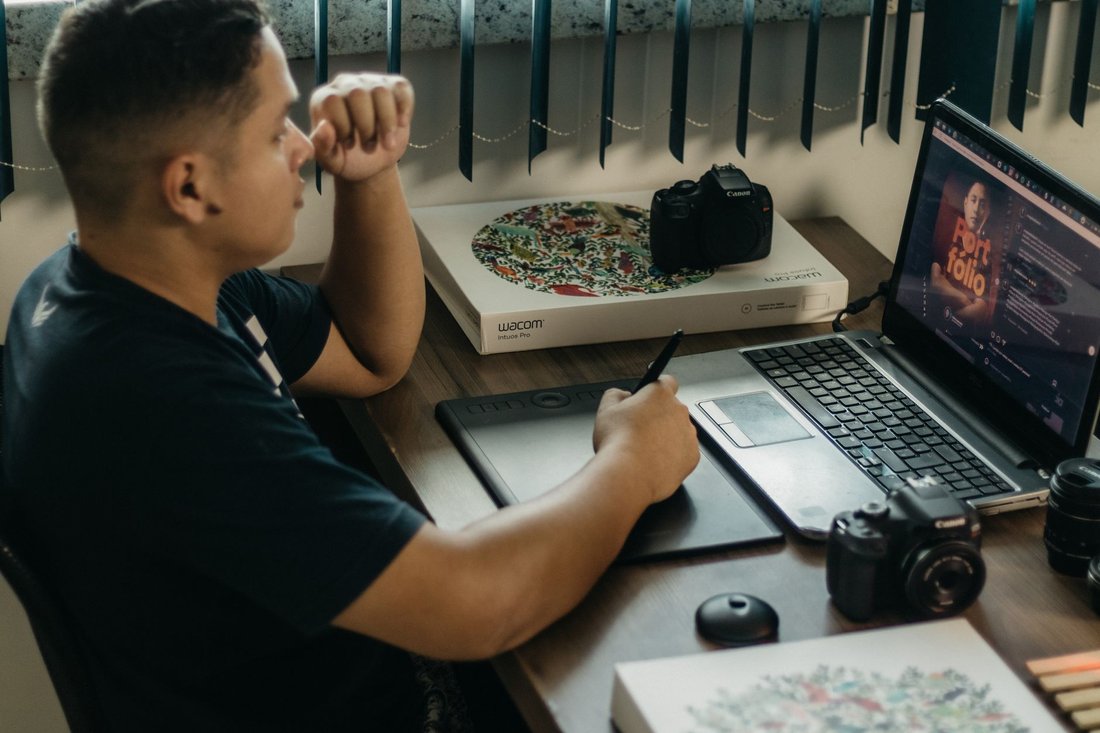
Open ten designer portfolios in a row and most of them will announce themselves with the same choreography: full-bleed hero shot, a tidy grid of thumbnails, a Dribbble feed pulled in through a widget, and an About page that reads like it was written by the platform itself. Every so often one looks like it belongs to an actual person. That gap, not raw talent, is what most personal branding tips for designers should really address: not how to look impressive, but how to look like yourself when a hiring manager or art director has forty tabs open and no patience.
Personal branding tips for designers start with subtraction
Every designer has more work than they should show. The instinct, especially early on, is to prove range: a logo project here, a food-delivery app redesign there, a poster for a friend's band, a hackathon prototype nobody used. Range reads as noise. A hiring manager scanning your portfolio site isn't trying to figure out everything you can do. They're trying to figure out one thing fast: is this person good at the specific problem I need solved. Cutting a portfolio down to four or five projects that share a throughline, whether that throughline is a design system, a category like fintech or health, or a particular kind of problem-solving, does more for a personal brand than any tagline ever will.
This is uncomfortable because it means killing work you're proud of. It also means the projects that stay need to earn their place, not just fill space.
Say what you thought, not just what you shipped
Most portfolio case studies are inventories: here's the brief, here's the final screen, here's the final screen from a different angle. Nobody remembers an inventory. What sticks is the moment a designer explains a decision that wasn't obvious, why they killed a feature the client wanted, why the layout broke convention, what the first version looked like before it got worse and then better. A case study built around a real decision does more branding work than a dozen polished mockups, because it's the only place a stranger gets to see how you think rather than what you produced. If a project doesn't have an interesting decision behind it, it probably doesn't belong in the top five.
Writing this way also protects against a common trap: designers who let their visual work speak for itself often get read as executors rather than strategists. A short paragraph of plain, specific reasoning next to the work changes that read immediately.
Choose your rooms on purpose
Behance, Dribbble, LinkedIn, and Are.na all reward different behavior, and treating them identically is a fast way to look generic everywhere. Dribbble rewards a single striking shot and favors visual trends, which is useful for surface-level craft signaling but terrible as a full record of your thinking. Behance holds longer case studies and gets found through search, so it functions closer to a second portfolio than a social feed. LinkedIn is where recruiters and clients actually make contact, which means the content that lives there should sound like a person explaining their work to a colleague, not a designer performing enthusiasm. Are.na works differently again. It's closer to a visible research trail, useful for designers who want to signal taste and influences rather than finished output.
Picking two of these and doing them well beats maintaining a thin presence on all four. A profile updated rarely but with care reads as intentional. A profile updated often but shallowly reads as anxious.
Consistency without sameness
A personal brand doesn't require a personal logo or a signature color palette, though some designers do build one and it can work. What it requires is that a person landing on your LinkedIn banner, then your portfolio, then a project you posted on Are.na, recognizes it as the same voice. That means the same headline language, the same tone in how you describe your work, and a photo that isn't a decade old. Small inconsistencies compound: a portfolio that says "brand and product designer" while a LinkedIn headline says "creative problem solver" while a Behance bio says "designer, illustrator, maker" reads as someone who hasn't decided who they are yet, which is a strange thing to communicate to people evaluating your judgment for a living.
Naming a lane doesn't mean staying in it forever. It means giving people a clear entry point, the same way choosing a niche gives freelancers a clear reason to get referred for the right jobs instead of the wrong ones.
What actually gets a designer noticed
- A small number of projects with real reasoning attached, not a large number with none
- A visible point of view about design, stated plainly rather than implied through mood boards
- Presence on the one or two platforms where your actual audience looks, kept current
- Language about yourself that matches across every place someone might find you
- Process work, including sketches, rejected directions, and the ugly middle draft, shown without embarrassment
None of this requires reinvention. It requires deciding, project by project and platform by platform, what you're actually trying to tell a stranger about how you think. The designers whose names circulate in hiring conversations aren't always the most technically dazzling. They're the ones whose work has a recognizable fingerprint, explained in their own words, in the places people were already going to look.
Want your name to look the way it should on Google?
Knownly builds and ranks truthful content about you so the results that represent you best are the ones people see first.
See how Knownly works →